
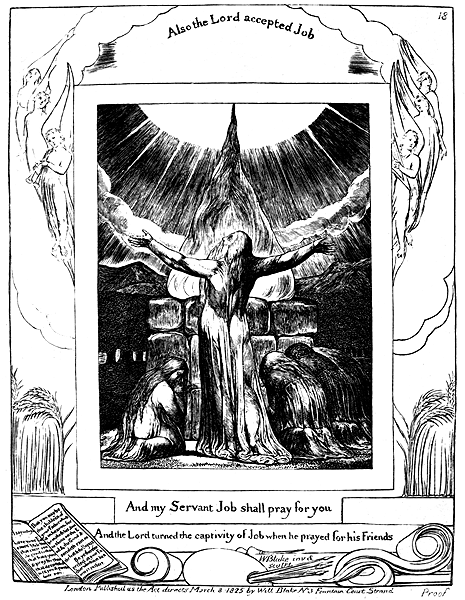
Beyond our imagination, not His

Between the final chapter of Job and the reading from John’s Gospel, I see ever more clearly how only by losing all but our faith in Him and at the same time, His in us, do we live authentically and fully in Him and our lives will truly glorify Him.

This is so very hard for me to understand, let alone believe – that the false has to die for the truth in us and of Him to live abundantly, that something has to fall to live upright.

24Very truly, I tell you, unless a grain of wheat falls into the earth and dies, it remains just a single grain; but if it dies, it bears much fruit

Job, a man of God,  seemingly loses it all and no possible rational reason suffices.  He loses his wife, children, provision, reputation and vocation in one fell swoop.  A life that he had faithfully, earnestly, unselfishly, lovingly lived for the first half of his life, is shattered.

I thought of Richard Rohr’s work on True Self, False Self, and his recent book, Falling Upward, as I re-read Job this past week.  In some ways it illustrated exactly what Rohr speaks about – two halves of our life, the first having to be lost, deconstructed, or taken away in order for us to accept the life ordained by God so that it can be lived to glorify God.

Richard Rohr describes the first half this way:

The task of the first half of life is to create a proper container for one’s life and to answer the first essential questions: “What makes me significant?”, “How can I support myself?”, and “Who will go with me?” As Mary Oliver puts it, “. . . what is it you plan to do with your one wild and precious life?” (“The Summer Day”). The container is not an end in itself, but exists for the sake of your deeper and fullest life, which you largely do not know about yourself! Far too many people just keep doing repair work on the container itself and never “throw their nets into the deep” (John 21:6) to bring in the huge catch that awaits them.

Problematically, the first task invests so much of our blood, sweat, eggs and sperm, tears and years that we often cannot imagine there is a second task, or that anything more could be expected of us. “The old wineskins are good enough” (Luke 5:39), we say, even though according to Jesus they often cannot hold the new wine. According to Jesus, if we do not get some new wineskins, “the wine and the wineskins will both be lost” (Luke 5:37).

Rohr is writing often about those believers really growing and maturing with God over a life time.  I understand his work to be, in part, about sanctification – how individuals and communities – are encouraged by the Holy Spirit to live a life that glorifies.

I found his recent remarks about this process wildly applicable to Job and the last chapter today.

Remember this: no one can keep you from the second half of life except yourself. Nothing can inhibit your second journey except your own lack of courage, patience, and imagination. Your second journey is all yours to walk or to avoid. My conviction is that some falling apart of the first journey is necessary for this to happen, so do not waste a moment of time lamenting poor parenting, lost jobs, failed relationships, physical handicaps, gender identity, economic poverty, or even the tragedy of any kind of abuse. Pain is part of the deal. If you don’t walk into the second half of your own life, it is you who do not want it. God will always give you exactly what you truly want and desire. So make sure you desire, desire deeply, desire yourself, desire God, and desire everything good, true, and beautiful.

Not even Job’s “friends” could keep him from the second half of life that God not only intended for him, but blessed beyond his own imagination, as well.

And all along and despite Job’s pushing back, fighting with God, lamenting, seemingly giving up, Job was passionate about life  – the one he seemingly lost, to be sure, but passionate nonetheless evincing  what Rohr speaks of above as desiring and desiring deeply and most of all God.

And whod’a thunk it?  Beyond Job’s imagination, beyond his prayer but not beyond his Abba Father, at the end of his day, Job bore much fruit.

Praise Him.
Posted in Whispers | Tagged , , , , | Leave a comment

Barriers to entry

Last week I was commanded by the Holy Spirit to share a word with someone.  I knew through every fiber of my being that a book I was reading was speaking to me and to another but I knew not how to cross the river to get the word to them.  In fact, on one level I tried to convince myself that God must be wrong in suggesting that it was I who was to try to reach them or had anything to say to them that they could hear.  I had a little debate with God, actually, pushing back not as severely as Job has been doing in the readings this week, but pushing back nonetheless.

In the end, I did try to reach the person to no avail.  And I’ve been sitting with this for over a week.  Why would the Spirit encourage me to do something I knew couldn’t and wouldn’t be received?

What happens when we know the Spirit is commanding us to do something, to say something, to reach out to someone and we have no way of doing so?   What are we to do with the whispers we receive from the Spirit that encourage us to encourage others if they can’t be found?

The readings from Acts this past week illustrated the dilemma, in part. Paul, Barnabas, Timothy – all of them traveling throughout the land of the Gentiles to share the good news at the behest of the Holy Spirit; speaking to people who, as today’s Psalm 61 describes, had not been “given…the heritage of those who feared God’s name”, some willing to listen, many not.

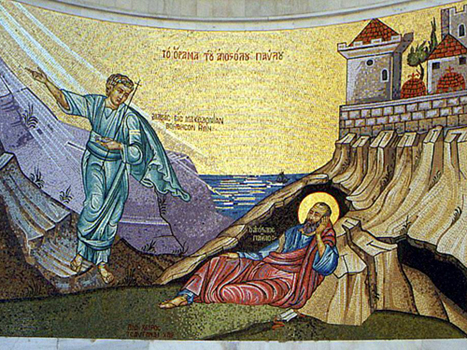
In the Acts passage I hear the Spirit saying that it is not enough to have the good news to share.  It is not enough to seek the lost sheep, at least in terms of word getting to them – the Word, or others. Those sought have to want to be found.  As here, in Paul’s vision, not until he saw the man from Macedonia inviting him was he able to cross over and share the word.

6 They went through the region of Phrygia and Galatia, having been forbidden by the Holy Spirit to speak the word in Asia. 7When they had come opposite Mysia, they attempted to go into Bithynia, but the Spirit of Jesus did not allow them; 8so, passing by Mysia, they went down to Troas. 9During the night Paul had a vision: there stood a man of Macedonia pleading with him and saying, ‘Come over to Macedonia and help us.’ 10When he had seen the vision, we immediately tried to cross over to Macedonia, being convinced that God had called us to proclaim the good news to them.

We are all sought.  From the beginning God seeks us all.  But until we make it known we want to be found, the Word doesn’t have much chance of landing, or being heard or understood or relevant, let alone transforming.

In today’s story the Word is not shared with some.  Even though at Pentecost the Spirit had commanded the good news be spread and the church was increasing in numbers daily as a result, that command was trumped by the second command to go only where invited.  The Word could be shared only if no barrier to entry was erected, if the people desired to be found.

Barriers to entry.  That is the lingering and lasting whisper from the Spirit today.  We erect them to protect ourselves, our worlds, our borders, our beings, our marketplaces, our endeavors, our nations, our churches, and our hearts.

Barriers to entry are just that – barriers – with no breathing room for the Spirit.  It may feel like a safe place for the time being.  But the Spirit isn’t about barriers and in time – in God’s time – they will be broken, the Spirit will get access, the person will be found, the Word, or the words, delivered.

Posted in Whispers | Tagged , , , , | Leave a comment

NOW…take stock of NOW to be able to glorify

54 Jesus therefore no longer walked about openly among the Jews, but went from there to a town called Ephraim in the region near the wilderness; and he remained there with the disciples.  John 11:45-54

The eternity of NOW and how living in the NOW is the only way to really live my life following and glorifying Him.  This is what the Spirit is reminding me of this morning after reading the gospel story describing the rejection of Jesus by his own people.

Jesus took stock of the situation – a reality check of sorts – and in this moment, the NOW, he moved on and past and by.  He  hadn’t finished his work – in God’s time, after all – and instead of defending himself against the mounting charges, instead of taking the Pharisees on, getting in their face, inflaming and inciting, he slips away.

In order to enlighten, not inflame, to allow the Word to reach all the people, he quietly moves away from those threatened by his presence, those who were to condemn him, from those who found him a problem to the status quo, who couldn’t hear what he was proclaiming, and least of all see who he was.  Jesus moves quietly away from the pulpit and street corner.  NOW was not the time to incite.  Jesus took stock of the NOW, didn’t push back, didn’t try to control or change it – not right yet.  Not time.

That’s where I am today.  In the NOW.  No more push back.  No more trying to control.  No more resistance to what is.  I can’t live fully or authentically or in and through Him if I am not living in the NOW, and living it, gratefully. This is the only way to glorify Him and give Him the respect and love I want so much to give.

Praise Him – I do.

Posted in Whispers | Tagged , , , , | Leave a comment

A long-winded bunny trail begins at the intersection of Politics and Gospel

…with no real end in sight, today….

Last night I attended the first of eight lecture nights from a Speaker’s Series I have subscribed to for over a decade.  Featured were Vermont Governor and former Democratic Party Chair Howard Dean and Karl Rove, Former Deputy Chief of Staff and Senior Advisor to President George W. Bush, in what was to be a dialogue about politics today, the election, and the pressing issues before the country.

Two more polar opposites couldn’t be had. And this is exactly the kind of pairing and dialogue that makes the series so compelling and why I subscribe to the series year after year.

Here is how the forum organizers describe the series, followed by a short list of some of those I have been fortunate enough to hear:

The forum brings eight speaker events per year to a local venue – all designed for the exchange of ideas, opinion and perspective for the enrichment of the community it serves. Speakers represent a wide variety of subjects from world affairs and politics to business and economics, education and the arts to the environment. Speakers are chosen on the basis of their extraordinary – usually lifetime – achievements and unique expertise in their particular field of endeavor.

  • David Brooks
  • T. Boone Pickens
  • Bob Newhart
  • Thomas Friedman
  • Tony Blair
  • Simpson and Bowles
  • Pervez Musharraf
  • Jared Diamond
  • Ted Koppel
  • Sandra Day O’Connor
  • Newt Gingrich
  • Dick Cavett
  • Fareed Zakaria
  • Andrew Weil
  • Charlie Rose
  • Jeffrey Toobin.

The forum is designed to enlighten, not inflame. There are no votes to be had, agendas to be forced.  Instead, the speaker speaks to what got them to where they were – how their life experience and thinking moved them from point A to point B, what informed their formation as a scientist, politician, actor, writer, researcher, traveler, teacher or religious leader.   And why do they hold the opinions they do about whatever field of expertise in which they worked.  A very civilized, substantive way to unpack complicated, dense ideas.  Dialogical.

For the most part my experience as a subscriber and attendee has been positive, and especially edifying during election seasons where I find myself lacking interest or energy to break through the shouting and sound bites coming from the two parties.

I bring with me to the lectures the intention to hear, to be open to what the person has to say, to be humbled and to learn something.  I bring with me, also, my world view – my lens – the gospel lens –  so that I may hear and understand the speaker’s words though my understanding of His Word.

And, indeed, I do  learn something nearly every time.

But last night threw me a curve ball when I realized mid-speech how easily I could get up and walk out, so offended was I by the audience – not the speakers – the audience who’s collective arrogance and self righteousness reached a fever pitch.  Hissing – I mean it – actual hissing when Rove spoke about the 2000 election in the context of a question about electing presidents by popular vote vs the electoral college.  And booing whenever he challenged the facts regarding the deficit and the entitlement culture.  And raucous clapping when Dean made a derogatory remark about “the rich.”

I was restless in my sleep last night thinking about the divisiveness that characterizes the political climate in this country – a divineness ushered in at that 2000 election, briefly salved by the tragic terror attacks on 9/11, then re-opened and widened by an economic collapse that seems to have pit US against THEM, pick a side.

And this morning the restlessness continued.  I actually had a visceral reaction to words in these verses from Psalm 119:

50 This is my comfort in my distress,
that your promise gives me life.
51The arrogant utterly deride me,
but I do not turn away from your law.
52 When I think of your ordinances from of old,
I take comfort, O Lord.
53Hot indignation seizes me because of the wicked,
those who forsake your law.

This is how I felt last night at that lecture, surrounded by a self-righteous, arrogant, holier-than-thou, entitled, utterly disrespectful  audience of affluent, mostly Caucasian, dare I say, elitist, well-educated, over-50, Americans.

But just as the psalm conjures US-THEM in seeking to make a case for the psalmist’s righteousness before God, so too, do I, no?

The adjectives I use to describe the audience last night combined with the ‘hot indignation’ I felt towards them is really only a reflection of me and my judgments, and distinguishes me for my own purposes from THEM.   Those who I deride – THEM- would not describe themselves as self-righteous, disrespectful or any of the other pejoratives I use.

I am thinking about this and how anytime I encounter US-THEM, whether in Scripture, in Church, from the pulpit or from the political arena, I am struck by how the accusations and the judgments of the other deafen the ears, blind the eyes, close the heart to what is being said.

And at the same time I’m back to thinking about Scripture and realizing that I encounter the whole US-THEM scenario  – one that seems to compel an individual or group to judge the other, to name them as an enemy, to see their sin but not their own thereby rendering them deaf to the other – I am realizing I encounter this most often in the Old Testament.

The US-THEM of Jesus is not divisive but unifying.  We are ONE in and of Him.  The distinction between you and me  – US-THEM is not exacted by demeaning, belittling, or presuming sin in the other.  We believe…and others do not, and that’s all the difference between me and you, US and THEM.  Though, what a difference it makes.

Wow.  Totally too long and no time to review an edit and clean up.  Sorry but thanks for hanging with me.

Posted in Whispers | Tagged , , | Leave a comment

Commuting with God at the wheel

Like a weekday commuter leaving his driveway on a weekend who finds himself on the road leading to his office instead of the road to the grocery store he was sent out to,  I found myself in the Psalter this morning – on auto-pilot – just one day after deciding not to begin my time with the Word at the Psalter.

So accustomed am I to this discipline that not until I was well through my daily commute of the lectionary did I realize not only that I had made the wrong turn, but also and most significantly, that I am not driving – He is, God, Jesus, Spirit – God my co-pilot, auto-pilot, whatever you want to call Him.  God has the wheel.

There He had me at the Psalter again and faced with another disagreeable psalm.   Psalm 45 is a Royal Wedding psalm, one which the NSRV footnote explains “is ancient and difficult, and its meaning in several places is not clear.  Its presence highlights the diversity of genres in the Psalter, and the psalm is an important source for reconstructing the ideologies of Israelite kingship.”

Kingship.  Not marriage.  And yet this psalm has so often been used as one of the references for the bridal paradigm describing Jesus, the church, vows and covenants thus mixing up, at least in my mind, meanings and metaphors about love and marriage.

Scripture can be so twisted and mixed up, it seems to me – used, abused and misused to support particular metaphors and paradigms for love, for God.

For the past few months I have been searching Scripture for God’s thoughts and revelations on love and marriage, generally, and specifically on the type of romantic, heart-connect love between two people that leads to a marriage, Christian or otherwise.  I have been looking into this as I assist a family member in selecting both biblical and secular readings and reviewing the liturgy for their upcoming wedding.

And as I’ve researched I have found very little in Scripture that speaks to the kind of love most of us today would consider essential for bringing together two people in marriage.  The romantic-heart connect-equally yoked-in this together – two whole people joining (not two halves making a whole) – type of love is the expectation and norm, today.  You don’t have this, you don’t have a marriage.

But in biblical times and thus woven into all the doctrines, liturgies, and laws this type of love was not just not the norm, but also not the point.

I have no more to offer today other than I’m grateful God is at the wheel and that I was redirected back to the Psalter despite my resolve to take a different road this morning.  He has me back thinking and praying about what He knows I need to think and pray about.

Praise Him.

Posted in Whispers | Tagged , , , | Leave a comment

http://conta.cc/PkTjV8

http://conta.cc/PkTjV8.

Posted in Uncategorized | Leave a comment

Psalter as Anchor, not Wings…why not both-and?

I am daunted that once again the psalm readings this morning are like an anchor rather than spirit-filled wings to which I look to the Word to send me into the day.   Instead, I am pulled down into my own personal space and hear only what the Spirit is saying to little ‘ol me, try as I might to lift up and out and onward.

Yet, a big picture idea does emerge, brought into view with this verse from Psalm 41:

8 They think that a deadly thing has fastened on me,
that I will not rise again from where I lie.

It is not the judgment of others – that we are ‘sick,’ – that matters at all.  No one can even wish this upon us or make it so, too limited by our own failings to deem righteous or unrighteous the behaviors, choices, and paths of others.  If we are following Him, living to glorify Him, we know and God knows ‘no deadly thing has fastened to us.’ Judgment from others trumps and triumphs over God’s only with our permission.

10 But you, O LORD, be gracious to me, and raise me up, that I may repay them.  11 By this I know that you are pleased with me; because my enemy has not triumphed over me.  12 But you have upheld me because of my integrity, and set me in your presence forever.

Thank God.

At the end of this reflection I find myself taking a right turn on the bunny trail back to the idea that the readings from the Psalter – all of the Old Testament, actually, has held me down, anchored rather than animated and lifted me.

Both-And.

I think the Spirit has me thinking about my personal practice of using the Daily Office as the structure for my time with the Word.  I am not sure that in this season of trial and tribulation the Psalter is the right place to launch into reflection.

By the time I reach the Good News I am too often distracted by the selections from the Psalter and Old Testament that speak to and about

  • the absence of God and thus, grace
  • revenge
  • preoccupation with sin
  • disobedience
  • about enemies and us-them scenarios
  • with the Law and its inability to save

all of which was trumped and triumphed over when Jesus came to us, lived for us, died for us, was raised for us and is now seated at the right hand of the Father for us.

So.

Where is the Spirit leading me?
I’m not sure. But, perhaps, away, from beginning my day with the Daily Office.

Posted in Whispers | Tagged , , , , , | Leave a comment

Abundant life from an abundant, enormous God

I’ve been rereading J.B. Phillip’s Your God is Too Small:  A Guide for Believers and Skeptics Alike this past week.  It has been a terrific accompaniment to the lectionary readings that have revealed the immensity of our Abba Father, such a variety of His nature revealed in the Psalter, in Job, in John’s Gospel and in Acts this week.

And too, the book has reminded me of the role theology plays in our walk with God.  That is, how we each came to know and believe in Him and where we settled in with that belief so that the Spirit either animates our lives or sits inside of us like a reference book unopened – just as I imagined the Israelites Paul and Barnabas encountered in today’s verses from Acts.

Phillip’s purpose for the book is to help the reader, “find a meaningful constructive God,” and begins by listing and describing common inadequate conceptions of God (theology) held by Christians and non-Christians, alike; a list he titles, Unreal Gods, little gods which infest human minds which thus limit a person’s capacity to see what God is truly like and what His purposes are.

Today’s second reading from the Psalter conjured one of the unreal gods’ Phillips describes, at this verse:

Psalm 32: 6 Therefore let all who are faithful
offer prayer to you;
at a time of distress,* the rush of mighty waters
shall not reach them.
7 You are a hiding-place for me;
   you preserve me from trouble;
you surround me with glad cries of deliverance.

Here is what Phillip’s writes about the hiding-place God, what he names ‘Heavenly Bosom’, an inadequate idea of God which is all too common with certain people – the god in whose bosom we can hide ‘till the storm of life be past.”  Phillips opens his comments by quoting the well known Wesley hymn, Jesus Lover of my soul:

Jesu, Lover of my soul,

Let me to Thy bosom fly,

While the nearer waters roll

While the tempest still is high

Hide me, O my Saviour,

Till the storm of life be past;

Safe into the haven guide,

O receive my soul at last.

 Here, if the words are taken at their face value, is sheer escapism, a deliberate desire to be hidden safe away until the storm and stress of life is over…although this “God of escape” is quite common the true Christian course is set in a very different direction.  No one would accuse its Founder of immaturity in insight, thought, teaching or conduct and the history of the Christian Church provides thousands of examples of timid half-developed personalities who have not only found in their faith what the psychologists call integration but have had to cope with difficulty and dangers in a way that makes any give of ‘escapism’ plainly ridiculous.

Those who are actually, though unconsciously, looking for a father- or -mother substitute can, by constant practice, readily imagine just such a convenient and comfortable god.  They may call him “Jesus” and even write nice little hymns about him, but he is not the Jesus of the Gospels, who certainly would have discouraged any sentimental flying to His bosom and often told men to go out and do most difficult and arduous things.   His understanding and sympathy were always at the disposal of those who needed Him, yet the general impression of His personality in the Gospels is of One who was leading men on to fuller understanding and maturity.  So far from encouraging them to escape life He came to bring, in His own words, “life more abundant,” (side note: this is from today’s Gospel, ironically) and in the end He left His followers to carry out a task that might have daunted the stoutest heart.  Original Christianity had certainly no taint of escapism. 

But those who try to maintain this particular inadequate god today by perpetuating the comfortable protection of early childhood do, probably unknowingly, do a good deal of harm.   Here are examples:

  1.  They prevent themselves from growing up.  So long as they imagine that God is saying, “Come unto Me” when He is really saying “go out in My Name,”  they are preventing themselves from ever putting on spiritual muscle, or developing the right sort of independence – quite apart from the fact that they achieve very little for the cause to which they believe they are devoted.
  2. By infecting others with the ‘to-Thy-bosom-fly” type of piety they may easily encourage those with a tendency that way to remain childish and evade responsibility.
  3. By providing the critics with living examples of ‘escapism’ they are responsible for a misrepresentation of the genuine Faith, which repels the psychologically mature who, naturally enough, have no wish to embrace a sentimental Jesus.
  4. By ‘retiring hurt’ instead of fighting on, they prevent the implications of the Christian message from touching whole tracts of human life and activity which badly need redeeming.

There’s more – so much more.  But for today, what I hear the Spirit saying is Come unto Me not to escape, but to ground and fortify.  I hear the Spirit saying, keep at it – pay heed to where I, God your Abba Father, am leading you, as unexpected and contradictory and challenging as this season in your life has been.   I don’t want you trying to escape the life I have ordained for you, but to embrace it and live it authentically, by My hand and trust that where I have lead and lead you, you are to go in My Name.  And there you will find life and life abundant.

Though the whisper came at the Psalter with the reminder of all the small theologies that bind up our Abba Father to actually work in our lives, it was in the Gospel that I heard the Spirit loud and clear:

John 10:10…I came that they may have life, and have it abundantly.

Posted in Whispers | Tagged , , , , | Leave a comment

All in His Time

He commanded us to preach to the people and to testify that he is the one ordained by God as judge of the living and the dead.

This one verse from the Acts reading today stopped me in my tracks and had me thinking about how many times I have recited and prayed, “the living and the dead.”  How many times? Countless.

And yet this morning as if it was the first time it occurred to me that  “the dead” is a reference to all those who died before Jesus was sent, lived, died and was resurrected.  Not just the folks who have died in my life time but all the dead of earth’s time.  And onto the bunny trail of time – God’s time – my mind wandered.

As I drifted into thoughts about the unknown, abstract dimension of God’s time, I sensed at the same time that Peter was teaching me something about final judgement and eternal life and salvation.

I know I have struggled to accept at face value final judgement.   What scripture says is clear – at least on the surface, unpacked level –  about judgement, belief, eternal life and salvation, but…hmm.

It is the buts that rear their ugly heads whenever I think about final  judgement and what scripture reveals; what about so and so, what about those never given the chance to know Jesus? what about my beloved grandfather who was abandoned by his father and could never disassociate that from his understanding of God, his true Abba Father? and what about those raised with law driven not grace driven theology?  and what about those self-righteous believers like my aunt who judged one of my children ‘unworthy’ because he hadn’t memorized the Ten Commandments thereby suggesting to him a performance-based, earn your way to heaven knowledge of God…what about, what about?

It is an additional ‘but’ that breaks open my understanding of final judgment, as in there are no exceptions to what is revealed in scripture but our capacity to understand this relative to all people in all time is limited by our capacity to understand God’s time.

And the idea of God’s time is what I see Peter introducing when he  describes an abstract idea – God’s time – with a discrete description “the living and dead.” Jesus is the judge of all the living AND THE DEAD of all time of every nation and corner of the world…the final judgment – the rapture – on that day – TIME as we humans understand it exists not and all are judged at some point to be granted life eternal.

And just as we will all be judged in God’s time, so, I believe, Jesus is made known to us and saves us in that same confounding God’s-time dimension.   Everyone – peoples of other nations and times, my beloved grandfather, my self-righteous, judging aunt, and my tender-hearted, trusting, believing son –  ‘everyone who believes in him receives forgiveness of sins through his name.’

God’s time confounding, confusing, abstract as it is works both ways – we are each and everyone of us sought and found in God’s time. And we are all judged for eternal life by Him and only Him and again, in His time.

Posted in Whispers | Tagged , , , | Leave a comment

Ministry, the good news and joy

In seminary students are asked to name a biblical story they most identify with in terms of ministry (actually for those seeking Holy Orders a sponsoring parish will ask this long before they reach seminary).  Where do you see yourself in the church?  And in so identifying a single story, the student or postulant, begins to get a sense of what his/her ministry will look like.  Will it be proclaiming as Peter on public steps and baptizing with the Holy Spirit?  Or laying on of hands and healing?  Are they called to walk with strangers in strange lands and then invite them to the table?  Or are they headed to reconciliation work with the Beatitudes as their guide?  Is an open, knowing and graced ear for the brokenhearted their gift, calling them to pastoral work at the well? Or is it to be at the ready  – perhaps weekly at a pulpit or daily at a typewriter – to explain and unpack the revelation found in the Word, as Philip does today in the reading from Acts.

For many, the account of Phillip and the Eunuch stands as one of the primary ministry inspiring biblical accounts.  For a variety of reasons the story of Phillip’s encounter with a seeker resonates as they see themselves full of the truth of the gospel, ready and waiting to proclaim, explain, and share the good news of the risen Lord.  In the story are myriad threads that make up the fabric of that truth:  the Word, Isaiah, prophecy, Jesus, a proselyte, water, a road, a journey, Jerusalem, the Holy Spirit.

This wasn’t the story I identified with in terms of ministry when I was in seminary or when I was in the process of discernment for ordained ministry.

It was a commentary from Charles Spurgeon that came to mind this morning – one I had read a few years back when I was considering different scriptural stories that best identified the essence of my call to ordained ministry.   He said this about today’s reading from Acts:

Ah, my brothers, you and I have need to understand the Bible. I will suppose you read it—let me hope I am not mistaken; but when you read it, do labor, above all things, to understand it. The Book was written to be understood. It is a book which speaks to us about our lives (for the soul is the true life), and about the bliss eternal, and the way to win it. It must be so written as to be understood, since it were a mockery for God to give us a revelation which we could not comprehend. The Bible was meant to be understood, and it benefits us in proportion as we get at the meaning of it. The mere words of Scripture passing over the ear or before the eye, can do us little good.

If anything, I was more than doubtful about my capacity to explain anything of the Word because, frankly, I didn’t know the Word in any such depth.  And I realized, seminarian or not, that the only person I identified with in the story was the Ethiopian; the seeker.

And then God sent me a Philip.  The irony.  There I was reading the Word, studying it, reading the passage to see if it ‘fit’ as an identifying ministry call, and God makes it known to me that a Philip I was not.  And He sends me one, someone who asked ‘Do you understand what you are reading?’ 31And I replied,  ‘How can I, unless someone guides me?’ 

Through this passage, the Spirit spoke to me, met me on the road and sent me an angel of the Lord to guide me.

My knowledge of the Word was so incomplete I couldn’t even imagine a day when I could unpack scripture, let alone guide someone to the truth.  And I felt more than presumptuous about what I thought was a ‘call’.  How could I be called to serve God in God’s church when His Word was still so foreign to me?

Ah, but faith – His steadfast faith in me and mine in Him.

And so, here I am today.  Not in ordained ministry, but on a blog and asking you, “Do you understand what you are reading?” and inviting you to hear what the Spirit is saying to God’s people through my lens, my understanding, and personal experience, my witness.

There’s a fullness of the gospel that is realized when the Word is unpacked and understood on a personal, particular, contextual level, I believe.   And as the one who was the Philip in my story said to me about this passage and this concluding verse:

39When they came up out of the water, the Spirit of the Lord snatched Philip away; the eunuch saw him no more, and went on his way rejoicing

…truly when the gospel comes in the fullness there is always joy.

Praise Him!


Posted in Whispers | Tagged , , , | Leave a comment