Job 42:2 ‘I know that you can do all things,
and that no purpose of yours can be thwarted.

What is meant to be will always find a way.

Daily Office Lectionary AM Psalm 72; PM Psalm 119:73-96 Job 42:1-17; Acts 16:16-24; John 12:20-26
Job 42:2 ‘I know that you can do all things,
and that no purpose of yours can be thwarted.
What is meant to be will always find a way.
Daily Office Lectionary AM Psalm 72; PM Psalm 119:73-96 Job 42:1-17; Acts 16:16-24; John 12:20-26
Job 40:7 ‘Gird up your loins like a man;
I will question you, and you declare to me.
8 Will you even put me in the wrong?
Will you condemn me that you may be justified?
Now, granted, this is a talk between God and Job and Job is being grilled. So, finding any sort of personal application here may be a bit presumptuous. But, what came to mind – a whisper to my heart, really – was a familiarity with this kind of tough talk and being grilled and what surfaced was the contemporary phrase, ‘tit for tat‘. I was paused to think of many a conversation I’ve had with others – humans, not with God – wherein I could hear myself or the other saying,
Will you put me in the wrong? Will you condemn me that you may be justified? Is this all about tit-for-tat?
I’ve had a hard time finding the right place in this kind of argument. Where should I stand? Am I being self-righteous? Holier than thou as Job seems sometimes to try to be?
Odd phrase, “tit for tat.” It’s origin appears to be from Olde English and its first use in a poem, expectedly (this for that, tit for tat). The phrase has moved its way through the ages in various applications but at its core meaning, it is about retaliation – mild thought it may be – and not revenge, but retaliation. Someone does wrong and so the other justifies their wrong in light of that. You do this, so I am justified doing the same.
Is God making such a claim? Not at all. God is simply making a point with Job that if he wants to challenge God, then he better speak up and realize with whom he, Job, is speaking. Job may not see the suffering that has come his way the way God does, and the Lord, says, fine, talk with me about this. Don’t run away. And don’t resign yourself to running away from me because you think I, your Lord God abandoned you. Not tit-for-tat. No room for retaliation.
Who does this kind of retaliation against an other – finding justification for doing something that serves you, though hurts the other, because a person another person seems to have done the same – (Job blaming God for his suffering and refusing to talk) serve?
This kind of retaliation has found its way into game theory and most recently and popularly in the infamous Prisoner’s Dilemma.
In game theory a tit-for-tat strategy involves a response to the other player’s original response. As long as the other player sticks to an “honourable” or “beneficial” strategy, you respond in kind. The moment the player responds with a “dishonourable” or “harmful” strategy, again you respond in kind.
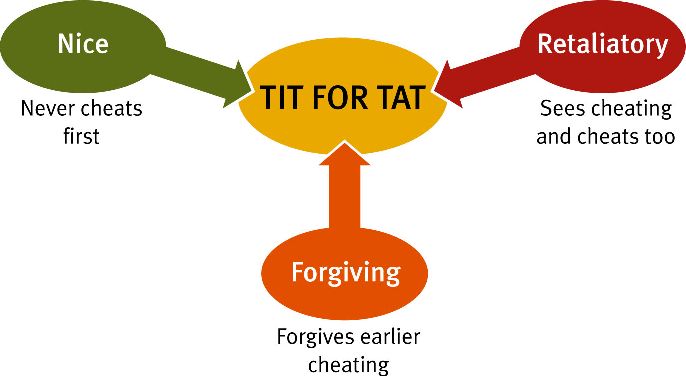
The Prisoner’s Dilemma, Game Theory
Bottom line is that what tit-for-tat requires above all else for comprehension and application is an opponent. There’s no theory of negotiation without an opponent. In the Book of Job, the repartee between God, Job, the supposed friends – me vs them, me vs Him, me vs me – requires opposition and an opponent. Someone on the other side.
I suppose what this reading shows me today is that even in loving relationships there are seasons of opposition – where the one we love is an opponent. This is the unique blessing I find in the Book of Job. That in the most steadfast, loving relationship of all – that between the Lord, God and His created, loved Job – an intense season of opposition unfolds. And in it and through it Job just keeps fighting – threatening to not talk anymore, accusing God of doing one thing after another to make him suffer, resigning himself to his undeserved fate. God is Job’s opponent. Job tries tit-for-tat game theory. The season rough, but…
But he doesn’t walk away. Job doesn’t stop talking. Nor does God.
It’s a season of discontent. A season.
Praise Him.
Daily Office Lectionary AM Psalm 56, 57, [58]; PM Psalm 64, 65 Job 40:1-24; Acts 15:36-16:5; John 11:55-12:8
Psalm 50
11 I know all the birds of the air,*
and all that moves in the field is mine.
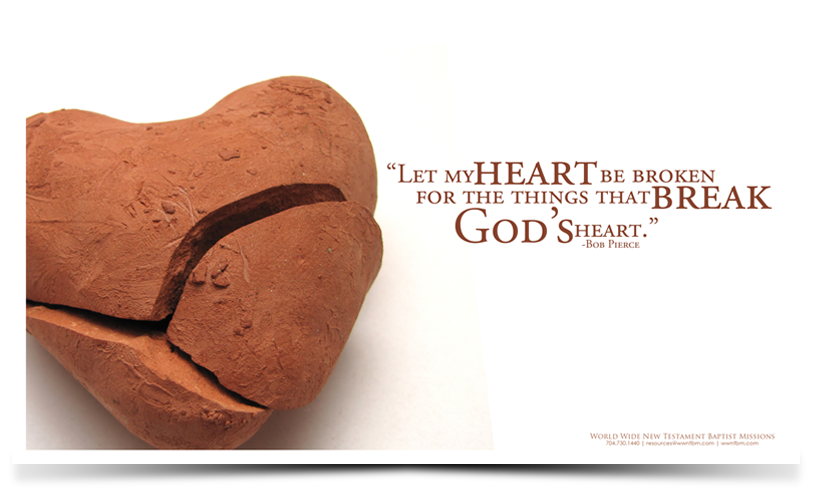
The first verses of Psalm 50 attest to the all-knowing, sovereign God. The litany of what God knows, what God made is of course, exhaustive. And after reading just yesterday about the demise of more bird species in my local area due to carbon emissions, I thought my God’s heart was, is, and has been breaking for such a long time. It is really so sad what we humans have done to God’s creation – to the earth and to ourselves.
The psalm continues this way – from the sovereignty of God in Creation to unfolding the brokenness Creation – of the earth and the brokenness of humanity. What was created and given in perfect love, has been squandered, misused, not cared for. Not loved.
The psalmist calls out the people for false living. Those who presume to live by the Word – the Law – and yet persist in deceit, envy, pride. And again my heart felt a pang of pain – sort of broke for God – at these verses:
0 You sit and speak against your kin;
you slander your own mother’s child.
21 These things you have done and I have been silent;
you thought that I was one just like yourself.
Cuts right to the quick, doesn’t it? What a heartache for a mother and our Lord, God. Can you imagine? Perhaps when the children are underfoot not getting along with a sibling is pretty standard, but once into their adult lives and if they are people of God, the heartache of seeing one judge, slander, speak against the other and ‘in the name of God.’ That must sting.
The bible has many stories of dysfunctional families – broken families – wherein one son is pitted against another (The Prodigal Son), or where mother and one son (often the youngest) stand on one side and father and other son (usually the oldest) on the other, and brothers against brother. In those stories, God’s glory is revealed. It is not hard to see God at work in those highly dysfunctional and broken human relationships.
But this little story as told in just these few verses…it breaks my heart for the mother of whomever one son is slandering. There’s no biblical hero or prophet destined to come out of this psalm – no story that will be turned to God’s glory. How could it?
Perhaps it is the context that makes a difference. Who these people are. They are the people of God and they know better. Yet, they judge all the way into their family of origin, deep into the heart of the matter. And in this case, it is a self-righteous judgment of the other that is ushered in by the simple and sadly common act of forgetting God. Acting like God, as judge. Presuming that because we follow Him, we know.
22 ‘Mark this, then, you who forget God,
or I will tear you apart, and there will be no one to deliver.
23 Those who bring thanksgiving as their sacrifice honour me;
to those who go the right way*
I will show the salvation of God.’
Thanksgiving isn’t only for what we identify as ‘blessings.’ Thanksgiving is for all that surrounds us, that has been given to us to love and care for. The birds. Our mother’s children.
How careless we people of God can become. We take for granted so much of what the Lord, God has given us. We act too often like we are God, like we know best for the earth and others. We forget God too easily.
And it breaks my heart to think of how God’s heart breaks every time He sees us live into our own brokenness and not into Him – into love.
Daily Office Lectionary AM Psalm 50; PM Psalm [59,60] or 93, 96 Job 29:1,31:1-23; Acts 15:1-11; John 11:17-29
Acts 14:21 After they had proclaimed the good news to that city and had made many disciples, they returned to Lystra, then on to Iconium and Antioch. 22 There they strengthened the souls of the disciples and encouraged them to continue in the faith, saying, “It is through many persecutions that we must enter the kingdom of God.”
Is it? Do we have to go through many persecutions to rest in God’s realm? Jesus taught the same. In the Gospel of Luke, Jesus warns the disciples that they will experience imprisonment:
“they will seize you and persecute you. They will hand you over to synagogues and put you in prison, and you will be brought before kings and governors, and all on account of my name” (Luke 21:12 NIV).
So, the short answer appears to be, yes, disciples – followers of Jesus – must be prepared for persecution, for hardship, for suffering even, ‘on account of his name.’
But I am wondering about the target audience for this teaching. Does it make any difference that the conditional warning – if you proclaim the good news, then you will be imprisoned, cast out, judged, suffer and if you strive to reach the kingdom of God, then you will be persecuted – isn’t a particular, specific kind of warning for those called to preach and teach the good news? Is there application here for all followers of Jesus? Is the road to the God’s realm necessarily rocky, unpaved, painful to walk upon?
No pain, no gain. Ninety minutes of suffering for 90 years of a healthy body. Both are quips often heard in my Bikram yoga class. There’s even a position that claims to give the person a mini-heart attack as a way of preventing a real one from ever coming on. Here is what a student will hear the teacher say as they move into this position – a position in which the end game is improved balance (righteousness? God’s realm?):

The Balancing Stick pose improves blood flow to the heart and the lungs. This is to give yourself a mini heart attack in Tulandandasana, so you don’t have one in real life. It helps prevent blocked arteries and future cardiac problems. It relieves tension from the spine by stretching it. It helps prevent varicose veins, builds strength in the lower body and abdomen and it works the pancreas, liver, spleen, as well as the nervous and circulatory system. It stimulates the abdominal organs, increases endurance, improves digestion and aids elimination. Naturally, you will experience improved balance.
Point is that expecting the persecution, the suffering, the pain is one way to be real about our faith journeys – a sort of reality check Word for me, today. The walk is difficult, painful, stops and starts, aches, losses, loneliness. But I choose to walk it knowing where it leads, knowing the end game, the final expression of the position as said in yoga. And in God language, knowing it leads me to be evermore kingdom living, in God’s realm where my restless heart – all our hearts – find love and peace.
Praise Him.
Daily Office Lectionary AM Psalm 119:49-72; PM Psalm 49,[53] Job 29:1,30:1-2,16-31; Acts 14:19-28; John 11:1-16
That was my first reaction to the morning’s psalm. Before I recognized that it is one of my least favorite psalms, the opening verse just made me smile.
It is one of my least favorite because not because of the poetry, the imagery, the feelings of love, of being in-love, which are evoked but because it just feels out-of-place in the Psalter. It is a love song, after all. Or as theologian C.S. Lewis describes ‘a laureate ode on a royal wedding.’ He goes on to call the marriage ode ‘magnificent,’ even.
Ok. I have studied the psalm, I know what secondary meaning can be mined. I’ve read Lewis’ reflections. Other theologians, too, like Walter Brueggemann and James Mays. I see how it deepens an understanding of all the bride/bridegroom imagery in scripture and as a student of the psalm, I can get into it and delight in learning all the possible whispers the Holy Spirit infused in the poetry meant for a wedding but that speaks through time to all followers of the Jesus.
But as a way to kick off a morning quiet time with the Lord, well Psalm 45 has just never ushered in that ‘sense’ of God’s presence that comes so often out of the words in the psalter.
But for this morning. So returning to that moment for a minute and the back-story.
I went to my laptop bible for the Daily Office readings instead of my personal bible because I am trying out different bible software for the readings. I have used Oremus up to now specifically for use on this blog. The links are easily inserted and made. But I prefer the layout of a different bible software. So I am trying it out and went there this morning and instead of writing down the day’s reading, I simply clicked the link to the morning’s psalm without noting which one it was.
I read verse one and I smiled. I could feel myself smile. Paused. Filled with such warmth – yes, I thought – my heart, your heart, all of us who pursue the Lord and who know we are pursued by Him, our lives are a godly theme. Our stories. God’s glory. It is all about hearts for our Creator and Redeemer that just overflow with a godly theme. And that momentary thought, that slice of life smiling moment, was just what I needed to remind myself to ground this day in gratitude, in joy, in God’s steadfast, relentless love. The smile that came to me at that verse prompted me to recall other smiling moments. People who make me smile. Memories that make me smile. Pictures, art, illustrations and photographs that say something without words. Just the image touches and brings a smile, like this one I came across recently on a Pinterest board by photographer, Sebastian Luczywo. Any parent might chuckle at this…who’s in the dog house today?
But, I digress.
I haven’t done much smiling lately. How lovely for the Holy Spirit to tickle my fancy this morning. To encourage me to not begin yet another day in sadness and resignation. To not wallow in the things that bring me down.
Such a simple, graceful thing, a smile. I’m so grateful one came to me this day.
What makes you smile? Where has the Holy Spirt touched your heart?
Praise Him.
Daily Office Lectionary Readings AM Psalm 45; PM Psalm 47, 48 Job 29:1-20; Acts 14:1-18; John 10:31-42
Psalm 52:7 ‘See the one who would not take
refuge in God,
but trusted in abundant riches,
and sought refuge in wealth!’*
8 But I am like a green olive tree
in the house of God.
I trust in the steadfast love of God
for ever and ever.
9 I will thank you for ever,
because of what you have done.
In the presence of the faithful
I will proclaim* your name, for it is good.
The psalm today brought before me the question of what we mean when we profess a “trust in the steadfast love of God for ever and ever.” David identifies himself as such – a believer, like a green olive tree, who is righteous, unlike those who take refuge, apparently, in provision, in money, in wealth.
Why is it that trusting the Lord God with our lives comes easier in some areas and not so easy in others? Is it possible that one can take refuge in wealth, in provision, in money and yet trust the Lord, God for all else?
The Lord, God has promised everything from provision to health to a joyful heart and sent his son, Jesus Christ as witness to this undying, steadfast faith in us. God loves us, believes in us, has good plans for us. Love God and love your neighbor as you are loved and God’s plans will unfold. Thy will be done, we pray, after all.
 So, how is it that believers think they can pick and choose where we they will give God the reins? Allow the Holy Spirit to have agency? Why and how does one see God at work in their lives in some areas and not others? How is it that some profess a trusting in the Lord for everything, but.
 Trusting for provision, for example. Lifting up to the Lord, God in prayer our provisional needs – not wealth, as the psalmist derides, but simple provision. If we know ourselves to trust God in this, it is so much easier to see God at work in this area. A job comes, goes away, something better comes along. That intervening period when the job goes away is the time we get on our knees and pray and trust that one door closed will lead to another one, opened. And when that happens, we see it. We rejoice. We even call it a blessing. Because we trusted the Lord any provision that comes our way we know to be from Him.
And some trust God’s healing promises unquestionably (Psalm 46:1 God is our refuge and strength,a very present help in trouble). We are at one time healthy, another sick. When sick we get on our knees, we pray. We trust that the Lord, God’s will for us to be well means a healed-healthy resolution, but if it means something else, we will accept. And we will consider the outcome of the illness to have served some good purpose. How we trust the Lord for healing is how we see and know God in both the illness and the outcome.
And yet. And, again. What does God say to the believer who chooses where to let Him in? To the one who prays, “I trust you, God, except for this one thing. I know you love me God, I trust that but I guess sort of conditionally. Let me handle this thing that calls me into question in the eyes of others. I don’t want you to stop loving me because of this one thing, so I’ll take care of it and get back to you, God.”
What kind of ego is behind that kind of prayer? What kind of head and heart? If a believer identifies as David does, as one who trusts in the steadfast love of God for ever and ever, how is it that at any given time and perhaps especially when our ego is involved, how is it we so easily grab the reins to steer our life in any direction but the one God has put us on?
Where does God reign in your life? Where have you loosened your grip and trusted fully in the Lord, God? Where have you tightened it?

Look mom, no reins!
As this sweet photo says to me, “Look mom, no reins!” Now that is trust in the love of God forever and ever.
Let go. Let God.
And, praise Him.
Daily Office Lectionary Readings AM Psalm 41, 52; PM Psalm 44 Job 32:1-10,19-33:1,19-28; Acts 13:44-52; John 10:19-30
John 9:1 As he walked along, he saw a man blind from birth. 2His disciples asked him, ‘Rabbi, who sinned, this man or his parents, that he was born blind?’ 3Jesus answered, ‘Neither this man nor his parents sinned; he was born blind so that God’s works might be revealed in him.
 Last week my son was bucked from a two-year old horse he was working to break. He was bucked off onto the ground and onto his back. Got right up, got back on the horse, but his back continued to bother him all the week long. He’d been bucked off many horses before and walked through days of aches and pains, but this time the pain was more sharp and wasn’t waning. Rather than ignore, he decided to have a professional check it out. Went to the doctor. Had some x-rays. Late last night he gets a call from the radiologist. Just the fact that it was nearly 10 PM shaded the way my son heard the news that an abnormality on his spine had been detected. An abnormality that concerned him. A defect with a specific name. Something lurking at the ‘bottom-end’ of his spine that may be the cause of the pain. Something more serious than simple bruising or a minor fracture. The doctor was concerned enough to call and alert my son of his preliminary findings. A sort of FYI call with no good news attached. Later that night, another call. The radiologist apologized. Said he hadn’t meant to alarm him, but since the time he had first called he had consulted with spine-specialist colleagues. They had concurred that though the abnormality was present it was not caused by the fall and did not contribute to my son’s pain. Nor did it presage a more serious condition. Simply something my son was probably born with and would live a healthy life with, regardless.
So, as they say – all’s well that end’s well. Pun intended.
Except for the worrisome assumptions that surfaced from what one doctor saw that others did not. The radiologist was reading my son’s x-ray through the lens of cause – what was causing the pain? With that focus, the radiologist identified an abnormality and reported his finding prematurely to my son – before he had sought input from other professionals to confirm his assumptions. The call ushered in a time – brief though it was – of worry.
This focus on cause is what detoured, derailed and blinded cancer doctors for many years to cures and treatment. More than just a focus on cause, there existed in cancer research a bias towards an ‘age-old notion that all cancers were connected by a common abnormality – the unitary cause of carcinoma‘. According to this theory,
Cancer was not an unnatural group of different maladies. Instead, a common feature lurked behind all cancers, a uniform abnormality that emanated from abnormal chromosomes – and was therefore internal to the cancer cell. (The Emperor of All Maladies: A Biography of Cancer, p 342)
Later, and as of now, cancer is understood in ways beyond the imagination of early researchers. There is no “uniform abnormality.” Cancer is both-and, not either or. Cancer resides within the human body at the cellular level. But is also comes to the human body from outside sources. It is complex and simple at the same time.
But it was the “uniform abnormality” lens through which the radiologist initially read my son’s x-rays. He was looking for a unitary cause – something internal – and when he located the abnormality it lead him to prematurely conclude that the abnormality was the cause. And the cure, or treatment, would be something directly applied to the abnormality.
But, the abnormality on my son’s spine was not the cause of his back pain, just as the doctor reported a few hours later much to my son’s – and my – relief.
Hmm. So what does all this have to do with today’s gospel?
I wonder if the Pharisees were, like early cancer doctors, so attached to an age-old notion about sin – its cause and cure – that they rushed to a diagnosis based only on what they saw and what they understood sin to be? Did they believe it was sin that lurked behind all abnormalities? Like blindness? Sin caused the blindness? The only question was who’s sin?
It seems silly – this metaphor.
And yet, amongst other things[1] this gospel passage teaches us something about the nature of sin – what it is, what it is not, where it comes from – that it exists in our DNA but is also comes into us from other sources – and ultimately, how we are cured, healed, forgiven our sin. Like cancer, it is simple and complex all at once. The Pharisees with their singular focus on sin, their myopic understanding of what sin was and from whence it came, misdiagnosed the blind man. They read the x-rays wrong. They alarmed the patient unnecessarily.
Had they consulted the professional first, had gone to Jesus, they would have learned that the abnormality was no sin of either the man’s or his parents. It was simply a physical condition with which he was born and he would live a healthy life, regardless.
Jesus did heal the man of his abnormality. But that act really had nothing to do with sin, per se – at least as the Pharisees understood sin.
Praise, God.
Note to reader: Today’s reflection is written quickly and is really just a taste of what the Spirit has me thinking about Sin. I haven’t had time to really connect or collect thoughts – this is sort of like the premature phone call the radiologist made to my son. So apologies for a ramble that may not offer ‘treatment’ or helpful insight. I trust a more informed word will come my way before the day’s end.
Lectionary Readings: AM Psalm 37:1-18; PM Psalm 37:19-42 Job 16:16-22,17:1,13-16; Acts 13:1-12; John 9:1-17
[1] Most importantly I think is that through the healing Jesus shows the Pharisees and us that he is who he says he is, We must work the works of him who sent me while it is day; night is coming when no one can work. 5 As long as I am in the world, I am the light of the world.
Acts 12:6 The very night before Herod was going to bring him out, Peter, bound with two chains, was sleeping between two soldiers, while guards in front of the door were keeping watch over the prison. 7Suddenly an angel of the Lord appeared and a light shone in the cell. He tapped Peter on the side and woke him, saying, ‘Get up quickly.’ And the chains fell off his wrists. 8The angel said to him, ‘Fasten your belt and put on your sandals.’ He did so. Then he said to him, ‘Wrap your cloak around you and follow me.’ 9Peter* went out and followed him; he did not realize that what was happening with the angel’s help was real; he thought he was seeing a vision. 10After they had passed the first and the second guard, they came before the iron gate leading into the city. It opened for them of its own accord, and they went outside and walked along a lane, when suddenly the angel left him. 11Then Peter came to himself and said, ‘Now I am sure that the Lord has sent his angel and rescued me from the hands of Herod and from all that the Jewish people were expecting.’
12 As soon as he realized this, he went to the house of Mary, the mother of John whose other name was Mark, where many had gathered and were praying. 13When he knocked at the outer gate, a maid named Rhoda came to answer. 14On recognizing Peter’s voice, she was so overjoyed that, instead of opening the gate, she ran in and announced that Peter was standing at the gate. 15They said to her, ‘You are out of your mind!’ But she insisted that it was so. They said, ‘It is his angel.’ 16Meanwhile, Peter continued knocking; and when they opened the gate, they saw him and were amazed. 17He motioned to them with his hand to be silent, and described for them how the Lord had brought him out of the prison. And he added, ‘Tell this to James and to the believers.’* Then he left and went to another place.
This whole passage reads like a dream to me. As if Peter were on the other end of the telephone line and reporting the crazy dream he had the night before. Light, dark, angels in the night.
Perhaps it reads like this to me today because as part of my own spiritual care I am participating in personal therapy that is presently focused on my dreams. Dreamwork is a common tool for psychotherapists referring to the:
systematic inquiry into or use of dreams for the purpose of healing or self-development
I am an advocate for therapy in general and Dreamwork therapy for discernment specifically, especially for people working in pastoral ministry and in God’s church. Like physical exercise for the body, and God’s Word and worship for the soul, psychotherapy is a way of holding up the mirror to ourselves to see how our insides manifest in life, how we live – or not – as we believe. To whom are we accountable? What has agency in our life? The Holy Spirit or the ego?
The therapist from whom I seek counsel received his doctorate degree in Psychology from a seminary so that all of his reflection and counsel is through the lens of the gospel. Not the doctrinal, moralistic, us-them bible talk, but the gospel of love, forgiveness, and obedience (responding to God’s will) to the One, Holy God.
The dual lens of theology and psychology favors an important emphasis on the gospel. It broadens – as in the broad place – the narrowly focused ego lens so often encountered in therapy, where self-determination and mind-over-matter are esteemed the healing agents of transformation.
 Dreamwork with a therapist who understands the unconscious as the place where God whispers and guides is, for me, an important discernment tool. Where is God in this? Where am I being lead? Where is self-ego getting in the way of living into who God created me to be?
What is described in the selection from the Book of Acts may have occurred just as reported. Factually, it may all line up. But this isn’t the take-away point if it is the Holy Spirit who is reporting. The Spirit had me read Acts 12 as if it were a dream of Peter’s and in the way he describes the event I hear his unconscious voice. And I heard my therapist asking Peter to wonder about what he associated with angels, prisons, gates, Rhoda, Mark – just as I am asked by him what I associate with this thing or that, with this person or that in my personal dreams.
And through that un-packing, the Holy Spirit makes known the Word of God. God’s Word for Peter – for me – for all believers:
the Lord (brings us) out of the prison.
God frees us. God releases us from prisons. God saves us from ourselves.
And there’s more. Peter is given the Word to move on – to proclaim this truth to others. To witness.
And he added, ‘Tell this to James and to the believers.’* Then he left and went to another place.
Dreams. Truth. Unconscious whispers. Witness.
Praise God.
Lectionary Readings: AM Psalm 26, 28; PM Psalm 36, 39Job 12:1,13:3-17,21-27; Acts 12:1-17; John 8:33-47

Today’s reflection I have excerpted from my personal scriptural journal. The words are not mine but I have no reference other than a Google search for the original author. When I searched the text, I found the reflection posted on many a blog. My guess is that it was first published in Forward Day by Day, a resource of Forward Movement Publications.
John 8:31 Then Jesus said to the Jews who had believed in him, ‘If you continue in my word, you are truly my disciples; 32and you will know the truth, and the truth will make you free.’
This is an often-quoted but deceptively simple verse. We would do well to ask, as Pilate does ten chapters later in this same gospel, “What is truth?”
We often start in the wrong place as we think about truth, which means we end up in the wrong place as well. As Jesus uses the word, truth is not correct information, and the opposite of truth is not misinformation. Nor is truth correct doctrine or belief. It doesn’t have to do with information or doctrine at all. It’s a matter of knowing who you are and who God is—and, by extension, who Jesus is. In today’s reading, those opposing Jesus defined themselves ethnically or nationally—they were descendants of Abraham. That won’t do, Jesus says. It’s a worldly distinction and it doesn’t mean you know who you are and who God is.
By what worldly standards do you tend to define yourself? If we are to be people of truth, and if the truth is to make us free, how must we rethink who we are and who God is? What will be different in our lives?
Lectionary Readings: AM Psalm 25; PM Psalm 9, 15
Job 12:1-6,13-25; Acts 11:19-30; John 8:21-32
For whatever reason the Holy Spirit has moved my thoughts recently from the Word to music-lyric expressions of a biblical idea. And many in the past few weeks have landed in the country music realm. I listen to a lot of country music – three different Pandora stations, actually. I find the combination of music and lyrics pretty powerful and a variety of artists and songs can speak to me.
Yesterday on one of my longer walks I heard a new one and when I arrived home, I noted in my files the song to use at some point to illustrate my understanding of the biblical word about the “broad place.” And praise the Lord, the readings this morning kicked off with Psalm 31 reminding me of God lifting us and out and into the broad place:
7 I will exult and rejoice in your steadfast love,
because you have seen my affliction;
you have taken heed of my adversities,
8 and have not delivered me into the hand of the enemy;
you have set my feet in a broad place
The “broad place,” found in Job 36:16; 2 Sam. 22:20; Pss. 18:19; 31:8; 118:5, has always been a compelling thought to me. It has captured my kingdom-living imagination as much as any of the biblical images. I have found its application in everything from the designs in Frank Lloyd Wright’s homes – how compression and boundaries are released and eliminated when one steps into God territory – to a comparison of how two theologians, Dietrich Bonhoeffer and Rowan Williams, describe the nature of the Christian life. I introduced that seminary paper with an image of a narrow, sheep’s gate this way:
I landed upon an image of a narrow sheep gate leading into a broad place. The gate – narrow just as Jesus warns in Matthew – representing the way to life everlasting where Christians find themselves in a beyond-their-imagination broad place, populated by ‘dwelling places’ (Jn 14:2: In my Father’s house there are many dwelling places. If it were not so, would I have told you that I go to prepare a place for you?).
In this particular image, I imagine both Williams and Bonheoffer having gone through the narrow gate. Once inside the broad place, Bonhoeffer bee-lined to a specific place, moved in, settled down. Williams? I think of him as taking his time, wondering around and peeking into all the windows, not terribly inclined to set up shop in any one place quite yet. Both are realm-living, but one a bit more attached to a specific space – explicit and discrete – and the other preferring access to all the options at any given time.
God’s broad place is not some open-ended free-for-all territory, but it is one without human-made constructions. That is what is so compelling about the image to me – the breaking through of human-made boundaries, walls, barriers to entry – be them constructions of the mind or tangible constructions of buildings, fences, rooms – all of which originate in the mind.
The idea of the broad place has helped me look at God’s church in new, hopeful ways. God’s church is not a denomination. It is not a building. It is not a particular way of worshiping or preaching or teaching. God’s church is best imaged, I think, in Paul’s body of Christ imagery. The body of Christ is God’s ‘church’ and that is a mighty broad place.
The broad place in God’s church is not found on one side of a fence or another. God’s Word – the bible – is not territorial – it doesn’t belong to only Christians – it doesn’t speak to only Christians. God’s broad place to which we are each and all called, is not either-or, but both-and.
Jason Aldean’s song, Church Pew or Bar Stool, wrestles with this idea. Here are the lyrics to read as you listen:
Not a whole lot going on, a small town Friday night
Revving up at a red light, on your mark get set go
Past a mom and pop restaurant
Same four trucks parked out front
I guess you gotta make your own fun
When you’re stuck in a place this slowThere’s only two means of salvation
around here that seem to work
Whiskey or the Bible, a shot glass or revival*chorus*
When you don’t seem to run on either side of the fence
People act like you don’t make sense
These big town dreams that I’ve been chasing
Will never come true if I wind up staying
And I don’t want to fall in, the same rut
That everybody here seems to be stuck in now
Why do I hang around
In this church pew or bar stool kind of townI’m like that AM station, that never comes in right
Till you pass the city limit sign, that’s the only time it
all gets clear
Well it’s crystal clear that I, just need to find
A place where there is no lines
And nothing like it is around hereSomeplace where it don’t feel like this
world revolves around
Whiskey or the Bible, a shot glass or revival*chorus*
Here it sometimes feels just like this
world revolves around
Whiskey or the Bible, a shot glass or revival*chorus*
Yeah I need to get out, of this church pew or bar stool kind of town
yeah yeah
Either or. The place the singer seeks is God’s broad place. The bible – God’s word – is not bound up or owned by any church pew. We don’t have a small-town God. We have a God beyond our imagination – beyond our human-made constructions of boundaries. Aldean’s song images a small-town moralistic, God. Just too small. He needs to break out and away. He is sought. Restless. The restlessness won’t rest until it lands in the Lord, God, as St. Augustine wrote. The broad place – “a place where there are no lines” – is a place where you, where all of us do make sense.
Praise God. Our big ‘ol God through whom all the world revolves.
Lectionary Readings: Psalm 31; PM Psalm 35
Job 19:1-7,14-27; Acts 13:13-25; John 9:18-41


 TRINITY SEASONS